
Quick answer
Launching a private-label hair extension line means building a repeatable product system, not simply adding a logo to a pouch. Start with a focused target client and a small, commercially coherent range. Then define hair specification, attachment type, lengths, shades, pack weights, packaging, quality-control points, MOQ, lead time and after-sales process before placing a bulk order.
The lowest MOQ is not always the lowest-risk choice. A small opening order can still fail if it contains too many shades, too many lengths, unclear packaging files or no approved sample reference. A controlled launch generally beats a broad catalogue that cannot be replenished consistently.
Start with the buyer you want to serve
Private-label products must make sense in the hands of a salon, stylist, distributor or online retailer. Begin with a concise customer profile:
- Salon professionals: need reliable installation-friendly products, clear training support, shade consistency and predictable replenishment.
- Hair brands and e-commerce sellers: need a differentiated assortment, product photography, packaging and accurate claims.
- Distributors: need breadth, stock planning, carton efficiency and consistent specifications across repeat orders.
Define the intended price position and service model before choosing the hair. A high-end salon range may focus on fewer natural blends and low-profile installations. A volume-oriented range may prioritise durable core shades and straightforward pack architecture. Trying to serve every client in the first purchase usually makes MOQ and inventory harder to manage.
Choose a launch assortment with discipline
For many new B2B programmes, one attachment family plus a limited shade and length matrix is easier to control than a full range of wefts, tapes, tips and clip-ins. Genius Weft is a natural starting point for brands focused on modern professional weft applications, while tape-in or keratin tips may be appropriate for different salon workflows.
Use sell-through evidence where you have it: salon requests, past retail colour sales, installer feedback and target-market hair demographics. Where you do not have history, build a test assortment around core natural tones and the lengths your target installers use most often. Do not imply that a universal shade list works across markets.
Define every SKU before pricing
Each SKU should have a single line on a master specification sheet: product type, hair material description, texture, length, net grams, shade reference, construction, pack count, label text, packaging format and image reference. A supplier cannot quote accurately against “20-inch blonde weft in luxury packaging.” They need the approved version of each element.
For example: “Genius Weft, straight, 50 g net hair, 20 inches, approved warm-beige blonde reference, low-profile seam against approved sample, one pack per recyclable inner sleeve, branded outer card, English care insert.” The hair description should match evidence you can support in your own product marketing.
Build your sampling process before the bulk order
Sampling is the point at which a private-label idea becomes an operable product. Separate the sample into stages:
1. Hair sample: confirm texture, density, ends, colour, weight and attachment construction.
2. Colour approval: compare in controlled light and retain the approved swatch or ring reference.
3. Packaging proof: approve dieline, copy, barcode placement, material, finish and mandatory market information.
4. Packed pre-production sample: inspect the exact hair and packaging combination before mass production.
Avoid approving hair from one sample and packaging from a digital mock-up only. A packed sample catches fit, compression, label alignment and product-information issues early. Keep one complete retained unit as the control sample for final inspection.
MOQ, lead time and budget: ask the right questions
MOQ can be set by hair type, colour, length, packaging component or total order value. Custom blonde colours, custom textures and bespoke boxes often create different constraints from standard black or brown stock. Ask suppliers to separate their quotation into hair, processing, packaging, sampling, freight and any destination costs so the decision is transparent.
Lead time should also be broken down: sample development, colour confirmation, packaging production, hair production, packing, final inspection and dispatch. A private-label launch needs buffer time for corrections. Treat a promised lead time as an operational planning input, not a marketing claim, until it is confirmed against your exact specification.
Design packaging that informs as well as sells
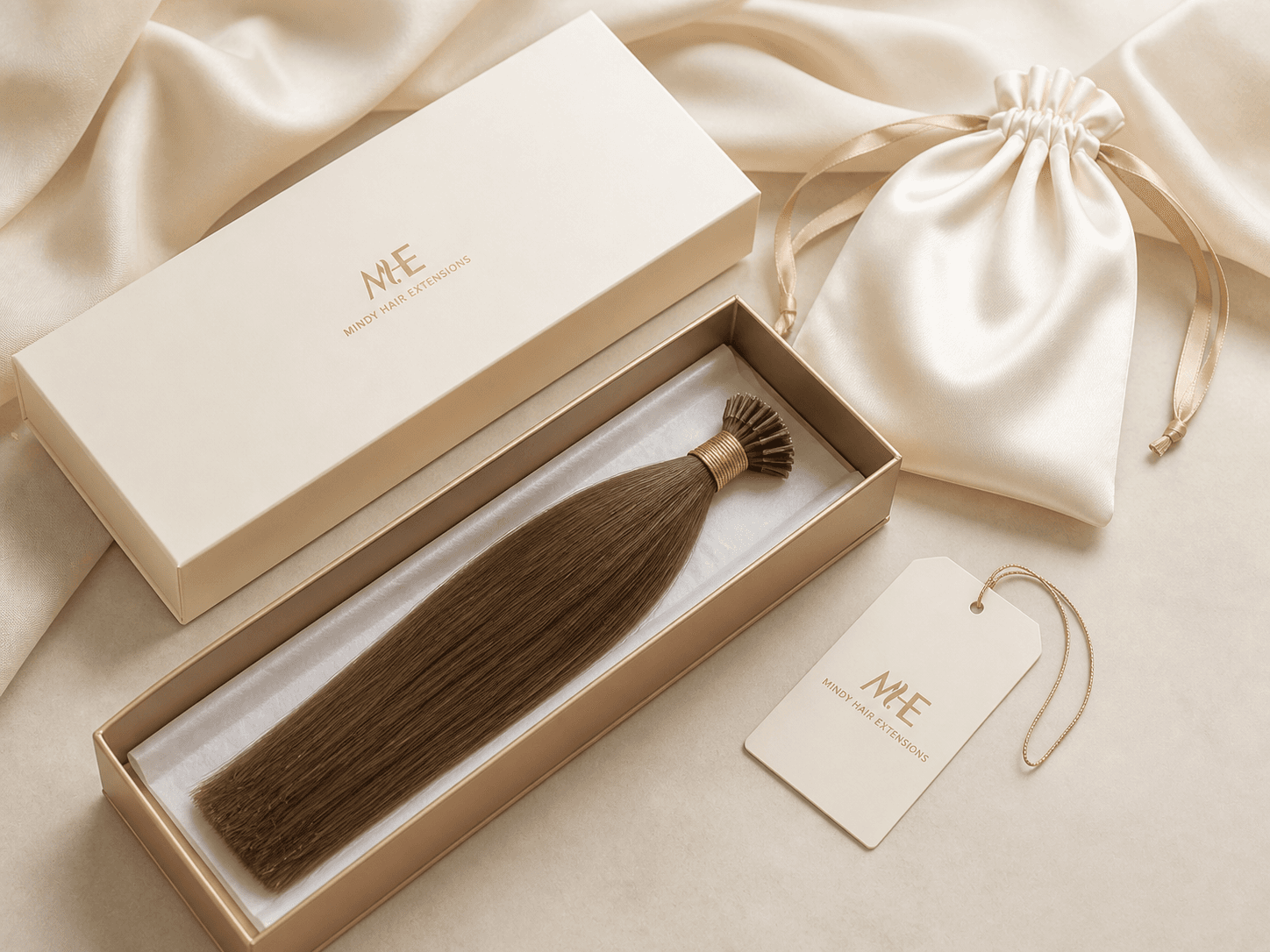
Premium packaging should protect hair, communicate the brand clearly and help the buyer or stylist use the product correctly. Include only claims you can substantiate. At a minimum, plan space for product type, shade, length, net weight, care guidance, installation or professional-use guidance, lot/traceability reference where used, and your business contact details.
Consider the unboxing sequence. A salon should be able to identify shade and length without opening multiple packs. A distributor should be able to scan or reconcile the SKU quickly. A client should see care instructions without losing them. Matte paper, foil and rigid boxes can look refined, but they must still fit the product and shipping method.
Prepare a quality and shipment plan
Before payment terms and dispatch are finalised, agree how the order will be inspected. Reference the approved packed sample and define what will be checked: net weight, length, colour, seam or attachment condition, packaging, labels, carton count and shipping marks. Decide who receives photos, how deviations are reported and what happens if a material issue is found.
For international trade, clarify Incoterms, freight responsibility, insurance, import duties and customs requirements with your logistics partner. Product compliance and labelling requirements vary by destination and product claim; obtain market-specific advice rather than copying another brand’s packaging.
Create product content before inventory arrives
The strongest private-label launch assets are made from the approved product, not generic images. Prepare product pages with factual product details, application guidance, care instructions, shade photographs in consistent light, and a route to contact your team. For salon-facing content, include installation preparation and explain when clients should seek a professional consultation.
Avoid lifecycle promises that cannot be controlled. Extension longevity is affected by starting hair condition, installation, washing, heat, chemical services, maintenance and client behaviour. A more trustworthy page explains the care conditions and advises a strand test before chemical work.
FAQ
What is the minimum order quantity for private-label hair extensions?
It varies by product, colour, length and packaging customisation. Ask for MOQ by SKU and by packaging component, not one headline number. A supplier may offer a manageable sample or pilot order while requiring higher quantities for custom printed boxes.
How long does private-label production take?
Timing depends on the approved hair specification, colour development, packaging and order size. Build in time for sampling, proof approval, production, inspection and freight. Confirm the final schedule in writing before launch planning.
Should I start with custom packaging?
If brand presentation is critical, custom packaging can be worthwhile, but it adds cost and lead-time complexity. A well-designed semi-custom solution can be a practical first-stage option while the range is being validated.
What should I include in a supplier brief?
State target customer, product type, hair specification, lengths, shades, net weight, packaging requirements, destination market, expected order volume, desired launch date, quality requirements and whether you need sample, OEM or private-label support.
Conclusion: a private label is a system of decisions
Private-label hair extensions succeed when the product, packaging, quality process and replenishment model support the same target client. Keep the first range focused, approve a packed control sample, document the product details and use shipment inspection to protect the standard you intend to sell.
CTA: start a private-label product brief
Ready to develop a professional hair extension range? Get a Quote from Mindy Hair Extensions. Send your preferred attachment type, target market, lengths, shades, net weight, packaging idea and estimated order volume, and we will help begin a structured product discussion.